

Texture matching is the part that decides whether a repair disappears or stares back at you. You can fill a hole flawlessly, sand it flat, and prime it perfectly, and it will still jump out the second the light hits it, because the wall around it is textured and your smooth patch is not. Getting the texture to match its neighbors is the actual skill in drywall repair, and it is the step that separates a clean job from an obvious one.
Here is how to figure out which texture you have and how each of the common ones is matched, from a light orange peel to a knockdown to the popcorn ceiling in the back bedroom.
Why texture is what gives a patch away
Light is the enemy of a smooth patch in a textured wall. Texture is just controlled bumps, and those bumps throw tiny shadows that your eye reads as one continuous surface. Drop a flat patch into the middle of that and it reflects light evenly while everything around it does not, so the repair shows up as a smooth island even when the color is a perfect match. People paint it twice trying to fix a problem that was never about the paint.
It is the single most common reason a repair looks like a repair. The patch you can find on the wall with your eyes half closed is almost always one that was filled and painted but never re-textured. Match the texture and the same patch vanishes.
First, identify your texture
Step back and look at a clean section of the wall in raking light. Orange peel looks exactly like it sounds, a fine spatter of little bumps with no flat spots between them, like the skin of an orange. Knockdown starts as a heavier spatter that has been flattened, so you get wider, irregular flat-topped islands with low areas between them. Popcorn is the heavy, lumpy, cottage-cheese texture you find on older ceilings. And some walls are simply smooth, a flat skim coat with no texture at all, which is its own challenge because there is nowhere for a sloppy patch to hide.
Matching orange peel
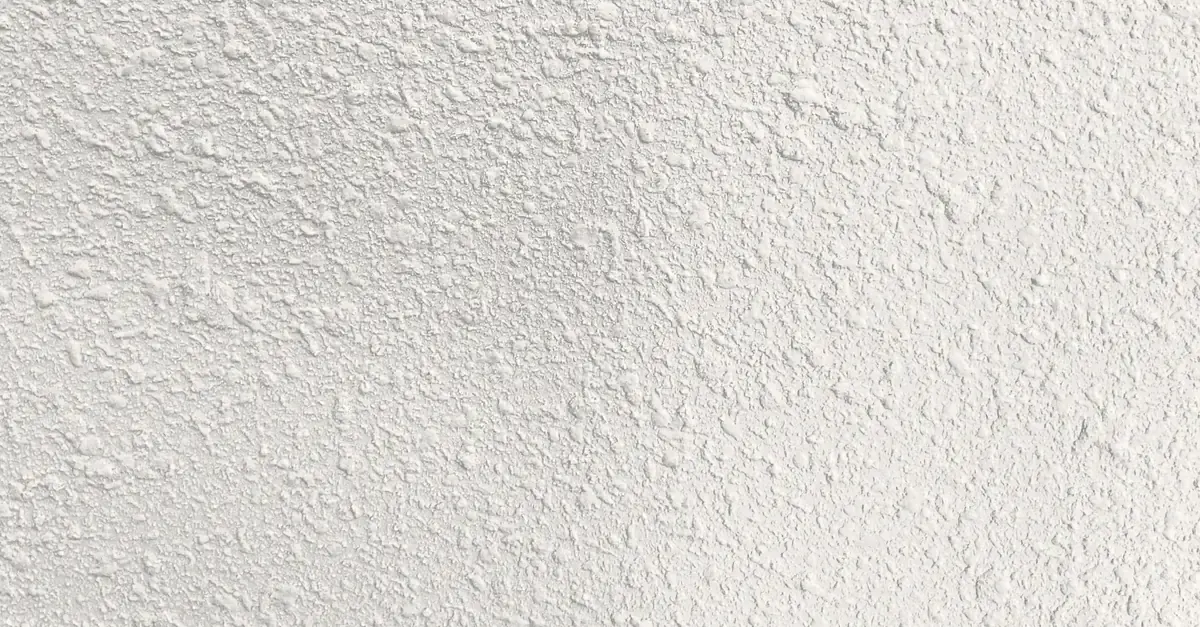
Orange peel is sprayed. Thinned-down compound goes through a hopper gun or, for a small patch, an aerosol wall-texture can, and lands as a fine spatter that you let dry and then paint over. The whole game is the size of the droplets and how heavy you lay it on, so the one rule that saves you is to test on a scrap of cardboard first. Dial in the spray until it matches the wall, then commit. Spray a little past the edges of the patch and feather it out so there is no hard line where new texture meets old.
Matching knockdown
Knockdown is orange peel with one more step. You spray the spatter on a little heavier, then you wait. After a few minutes, once the peaks have firmed up but are not dry, you drag a wide knockdown knife lightly across the surface to flatten the tops into those signature islands. Timing is everything here. Too soon and you smear it into mud, too late and it will not flatten, so it takes a feel that comes from doing it, which is exactly why knockdown is the texture that sends most people to the phone.
A word on popcorn ceilings
Popcorn can be patched with a spray-on popcorn product, matched in coarseness and then painted, but there is a serious catch on older homes. Popcorn ceilings in homes built before 1990 may contain asbestos, and scraping or sanding them disturbs fibers you do not want in the air. Do not start scraping an old popcorn ceiling on a hunch.
If the house is that vintage, have the material tested first, and read the EPA's guidance on asbestos in the home. Testing is cheap, and it is the one place in drywall work where guessing is genuinely a bad idea rather than just a redo.
Prime, paint, and where to stop
Once the texture matches and is dry, prime the patch so the new compound does not flash a dull spot, then paint. One more thing trips people up: even a flawless texture and color match can show a faint edge where new paint meets old, because paint ages and sheen shifts over time. The cleanest result is to paint the whole wall out to its natural corners rather than spot-painting a patch in the middle. It is more paint, but it is the difference between a wall and a wall with a patch on it. The full drywall finishing and texture service covers this end to end.
When to just call somebody
A small orange-peel patch with a spray can is a very doable weekend job, and worth trying. Knockdown, a large area, a ceiling, or an old popcorn ceiling are where the odds tip toward calling someone who matches texture every day, because a near-miss on texture is more obvious than no patch at all. That is our bread and butter across Greater Houston, whether the repair started as a hole or a water stain. Look through the other guides or call and we will take a look.
Frequently asked questions
How do you match existing wall texture on a patch?
First identify the texture, usually orange peel, knockdown, popcorn, or smooth. Then recreate it on the patch, normally by spraying thinned compound to match the spatter, and for knockdown, flattening the peaks with a knife once they firm up. Always test on cardboard first, spray slightly past the patch, and feather the edges so there is no hard line.
What are the main types of drywall texture?
The common ones are orange peel, a fine even spatter like the skin of an orange; knockdown, a heavier spatter flattened into wide islands; popcorn, the heavy lumpy texture on older ceilings; and smooth, a flat skim with no texture. Houston walls are most often orange peel or knockdown.
Can I match wall texture with a spray can?
For a small orange peel patch, yes. Aerosol wall-texture cans work well if you test on cardboard and dial in the droplet size before spraying the wall. Knockdown and popcorn are harder to fake from a can over any real area, and a poor match shows more than the original damage did.
Why does my patch still show even though it is smooth and painted?
Because the wall around it is textured and the patch is not. A smooth area reflects light differently than the bumps around it, so your eye finds it regardless of how good the color match is. The fix is to re-texture the patch to match its neighbors, then prime and paint.
Do I have to repaint the whole wall after texturing a patch?
Often yes, at least out to the nearest corners. Even a perfect texture and color match can leave a faint edge where new paint meets old, because sheen shifts as paint ages. Painting wall-to-corner avoids that halo and is usually the difference between an invisible repair and a visible one.