
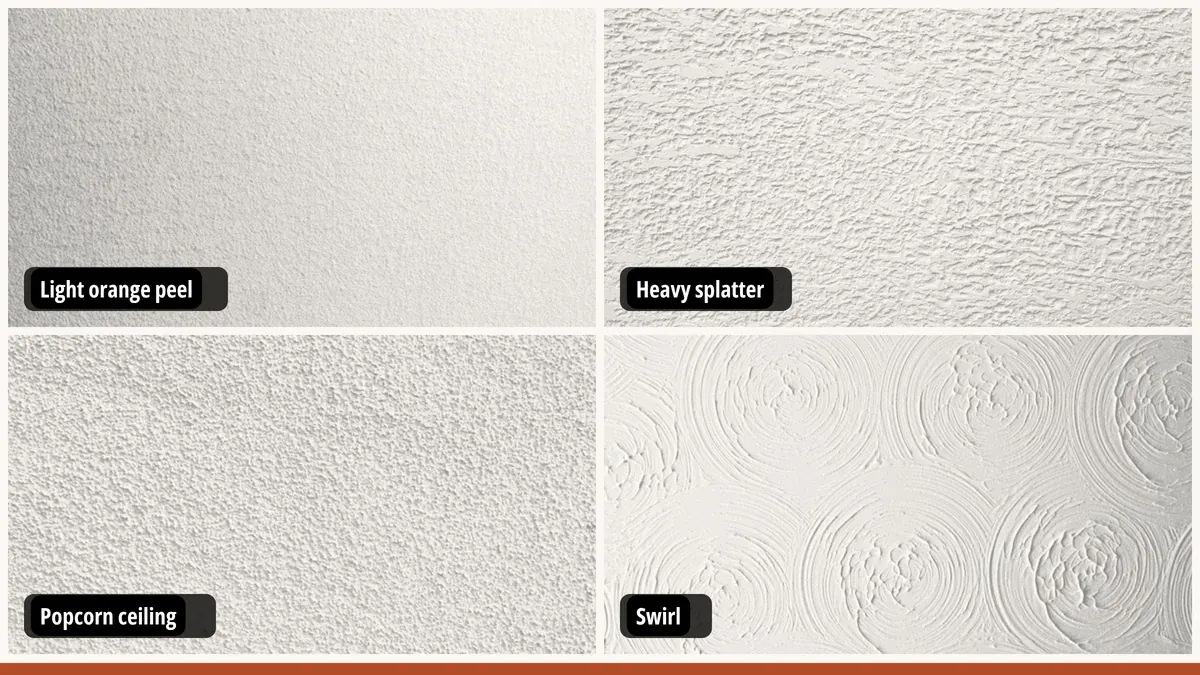
There are about a dozen types of wall texture and ceiling texture you will run into, and nearly all of them come from three ways of putting mud on drywall: spray it, trowel it, or brush it. This guide covers each drywall texture type with a photo, how it is made, what it is like to live with, and how hard it is to patch without the patch showing.
Texture exists for a practical reason. It hides the small waves and seams a flat wall shows under side light, and it goes on faster than a perfectly smooth finish. The trade is that every texture is harder to repair than a smooth wall, and that is where most patches go wrong.
If you are here because a repair left a smooth square in the middle of a textured wall, find your texture below. Knowing its name is most of the battle.
Which textures are commonly used on walls?
On walls, the two sprayed textures cover the most ground: orange peel, a fine even spatter, and knockdown, the same idea sprayed heavier and then flattened. Smooth walls are the other big group, finished to level 4 or level 5 depending on the paint and the light.
Hand textures fill in the custom end. Skip trowel and Santa Fe are both laid on by hand, so no two installers make them quite the same. That is charming on a new wall and a real problem on a repair.
One Houston note. Homes built before about 1960, in the Heights and parts of the East End, are often plaster and lath rather than drywall, and standard gypsum patches fail on plaster. If your walls are hard as a countertop and the house is that old, you may not be looking at drywall texture at all.
Which textures are commonly used on ceilings?
Ceilings get the heavier textures. Popcorn, also called acoustic or cottage cheese texture, was sprayed on ceilings for decades. Stomp and slap brush patterns show up mostly overhead too. Knockdown and orange peel work on ceilings as well as walls, and a smooth ceiling is the modern choice.
Ceiling texture has a harder job than wall texture. Light from a window rakes across a ceiling at a low angle, which is the worst light there is for showing a seam. Nobody has ever looked up and admired a tape joint.
Ceiling work also costs more than wall work, for reasons that come down to gravity. The details are on our ceiling repair page.
What are the spray-applied textures?
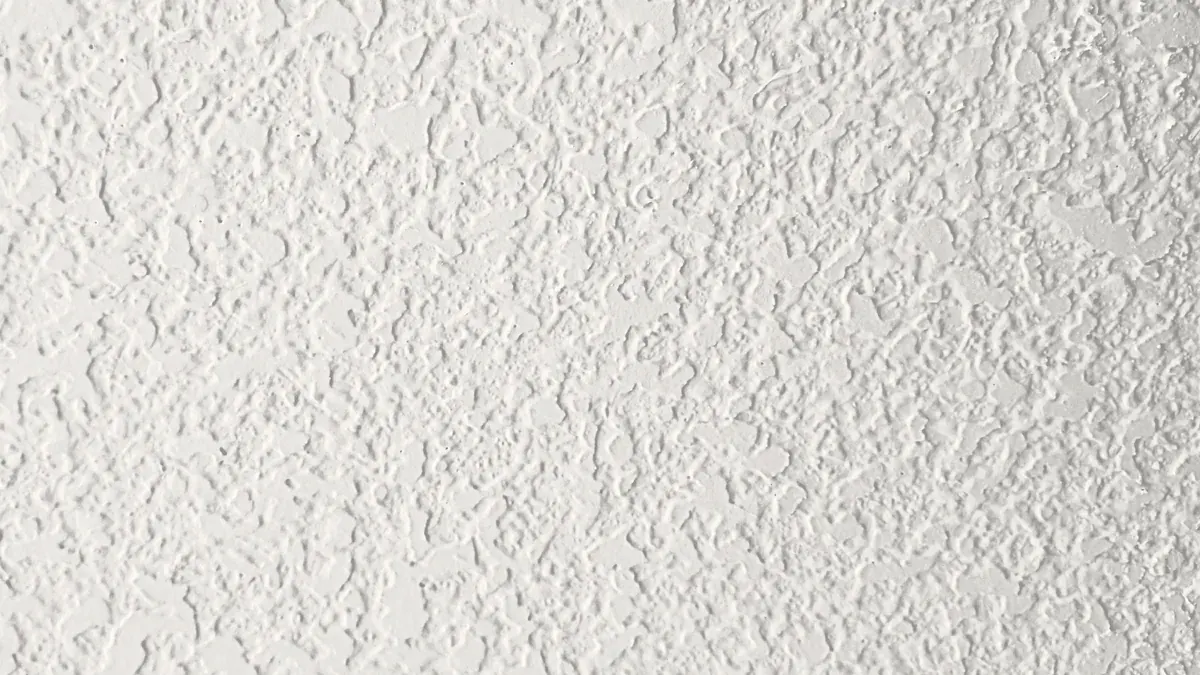
Spray textures go on with a hopper gun and an air compressor. Thinned joint compound sits in the hopper and air pushes it out in droplets. The size of the droplets, and what you do after they land, decides which texture you get.
Orange peel
Walls and ceilings
What it looks like
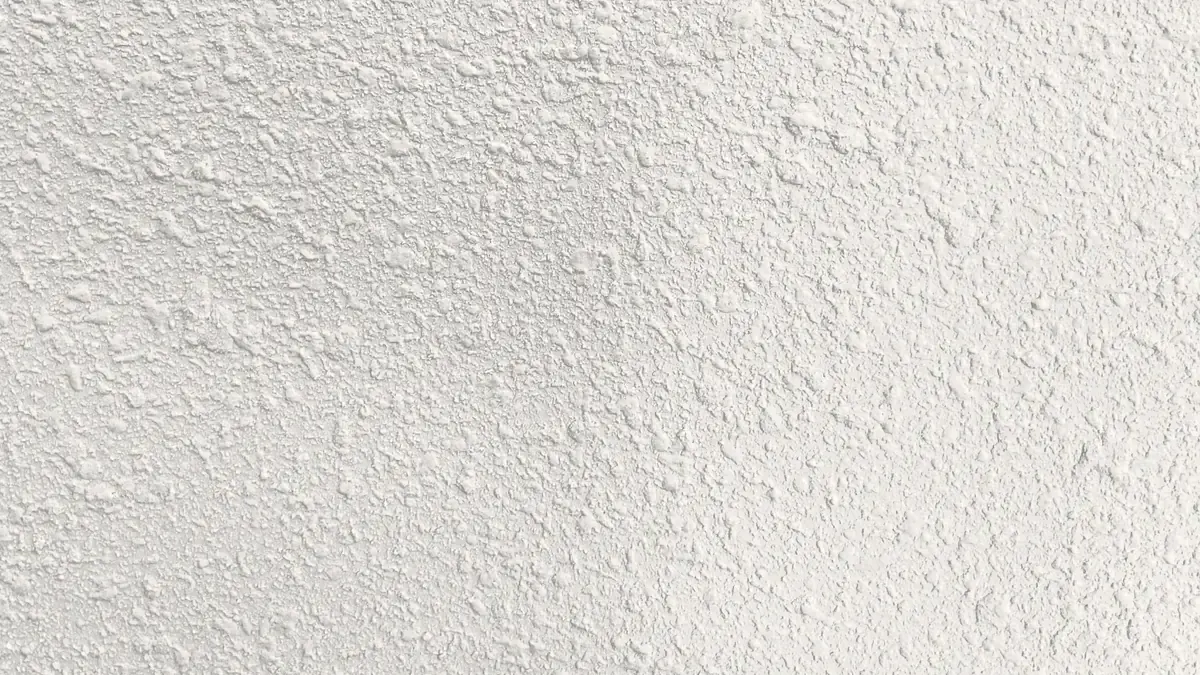
Orange peel is a fine, even spatter of small bumps, like the skin of an orange. It comes light, medium or heavy, and heavier just means bigger bumps.
How it is made
Thinned mud is sprayed on and left alone to dry. No knife touches it. For small areas there are roller versions and aerosol cans.
Living with it
It hides small flaws without looking busy. It is harder to wipe clean than a smooth wall, and some guides steer it away from kitchens and bathrooms for that reason.
Patching it, and what a repair involves
It is the easiest texture to patch. The repair is feathered smooth, then new orange peel is sprayed over it and past the edges so it melts into the old pattern. Getting the droplet size right is the part that takes practice. Our guide on how to match drywall texture after a repair walks through it.
Do it yourself, or call?
A small orange peel repair is a fair do-it-yourself job with a spray can and a piece of cardboard to practice on. Call when the patch is bigger than your hand or sits where the afternoon sun hits the wall.
Knockdown
Walls and ceilings
What it looks like
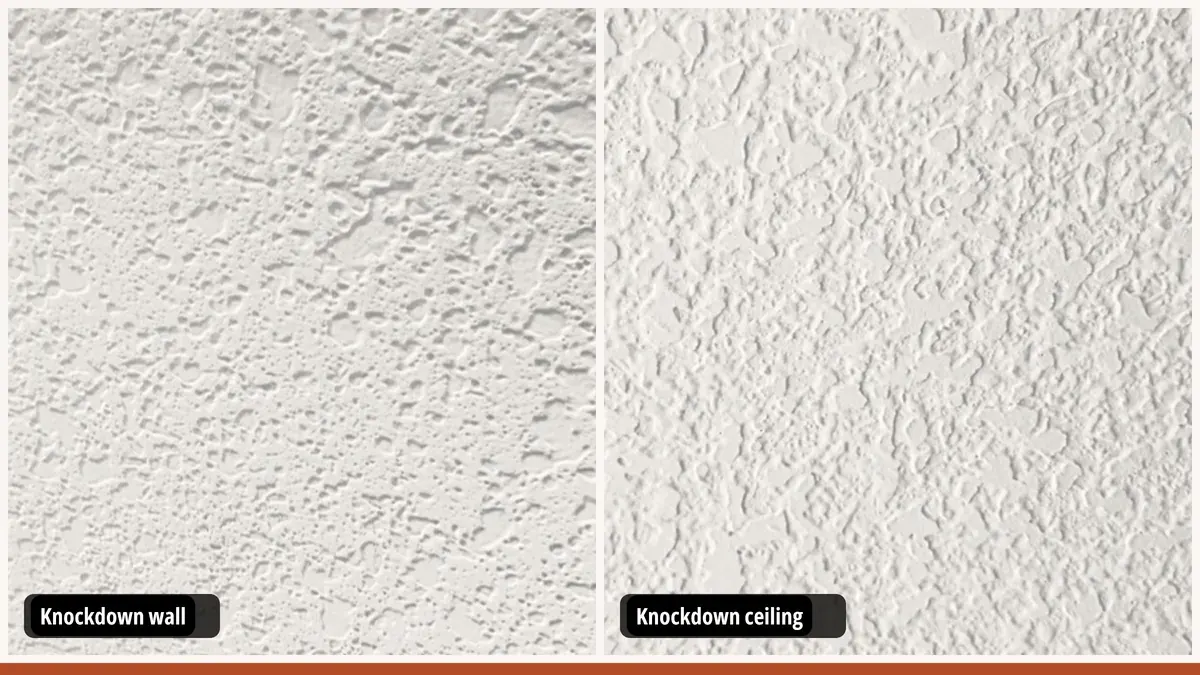
Knockdown looks like flattened splatter: wide, irregular islands of mud with smooth tops, a little like stucco.
How it is made
It starts like orange peel, only heavier. The mud is sprayed on in bigger droplets, left a few minutes to firm up, then flattened by dragging a wide knockdown knife lightly across the peaks. The wait is the whole trick.
Living with it
Knockdown hides imperfections better than orange peel, which is why it turns up on walls that were never quite flat. The grooves between the islands trap dust, so it is harder to keep clean.
Patching it, and what a repair involves
It is harder to match than orange peel. The pattern is irregular, and the moment the knife goes on decides how flat the tops end up, so a patch knocked down too early or too late reads as a different texture. Most drywall repairs fail at the texture, not the patch, and knockdown shows why.
Do it yourself, or call?
A careful homeowner can knock down a small patch with an aerosol knockdown can and a wide putty knife, after some practice on cardboard. For anything in the middle of a wall, a pro who does it every day will be faster than your third attempt.
Popcorn (acoustic)
Ceilings
What it looks like
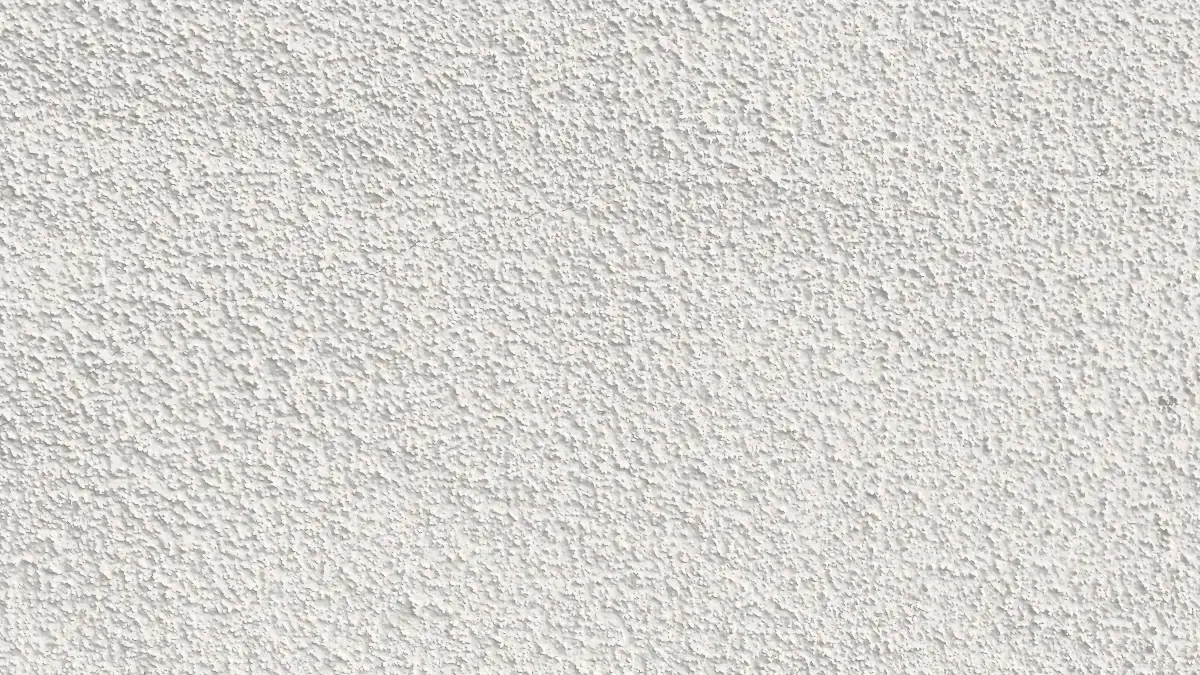
Popcorn is the lumpy, cottage cheese texture sprayed on ceilings, also called acoustic texture. It softens echo in a room and hides a rough ceiling.
How it is made
It is sprayed through a hopper gun as a thick mix with a coarse aggregate in it, then left as it lands.
Living with it
It dates a room, holds dust and crumbles when something bumps it. It can also put off buyers.
Asbestos: test before you touch it
If your house was built before 1990, have the ceiling tested for asbestos before anyone scrapes, sands or drills it. That is our rule, with no exceptions. The EPA banned spray-applied asbestos surfacing materials in 1978, but existing stock stayed in use for years after, and you cannot tell by looking. If the ceiling is intact and nobody is going to disturb it, the EPA says it does not need testing. See EPA's guidance on asbestos at home and the Texas DSHS asbestos program.
Patching it, and what a repair involves
Small popcorn patches are matched with a popcorn patch product once the asbestos question is settled. Taking the whole ceiling down is a different job. In Houston, scraping a popcorn ceiling typically runs $2–3 per square foot. That covers the scraping only, and the exact number depends on the ceiling, so it comes after we have seen it in person.
Do it yourself, or call?
Do not scrape a popcorn ceiling yourself in a house built before 1990. Test it first. If it contains asbestos, removal belongs to a trained and accredited asbestos professional.
Splatter and stipple
Walls and ceilings
What it looks like
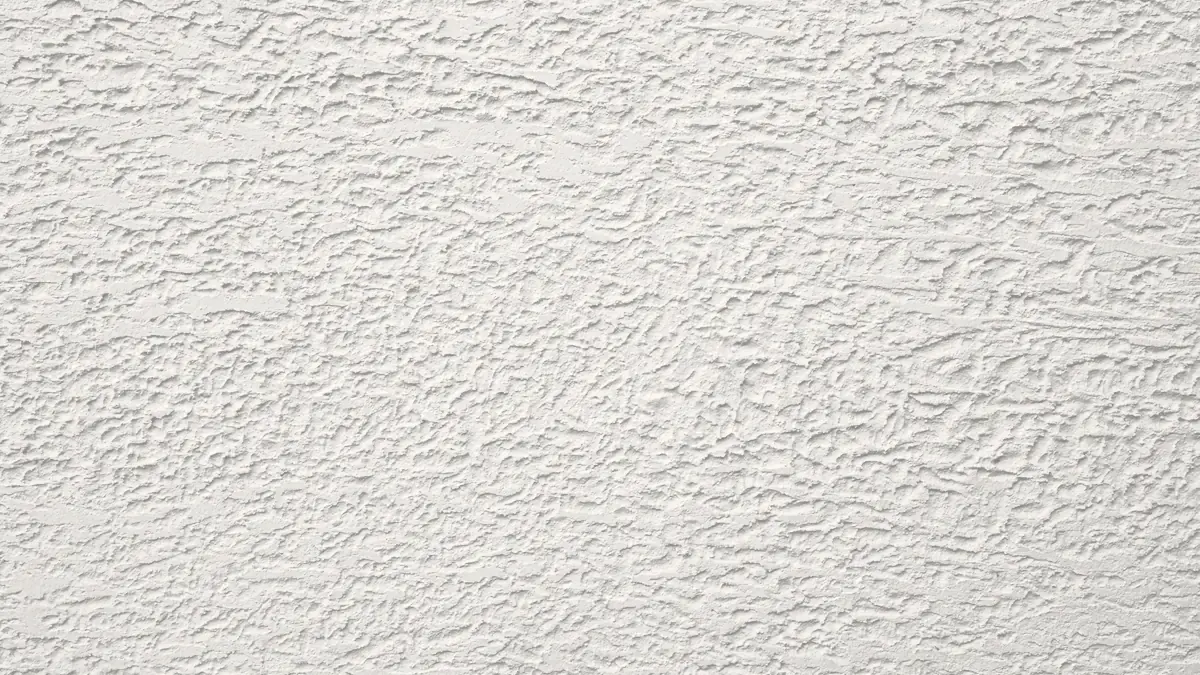
Splatter is the heavy, raised spatter that knockdown starts as, left without the knife. Stipple is a looser word. Some people use it for any brushed or rolled ceiling texture, others for a fine sprayed pattern, so a photo tells you more than the name does.
How it is made
Splatter is sprayed with a hopper gun in large droplets and left raised. Stipple is usually rolled or brushed on.
Living with it
Both hide flaws well. Both hold dust in every peak.
Patching it, and what a repair involves
Matching depends on which one you really have. A raised splatter is sprayed to match, a stipple is copied with the same brush or roller.
Do it yourself, or call?
Small spots are a reasonable do-it-yourself job once you know which texture it is. Larger ceiling areas are worth a call, mostly because of the ladder.
What are the hand-troweled textures?
Hand textures are laid on with a trowel, a knife or a hawk, one pass at a time. Every installer's version comes out a little different, which is lovely on a new wall and a headache on a repair.
Skip trowel
Walls and ceilings
What it looks like
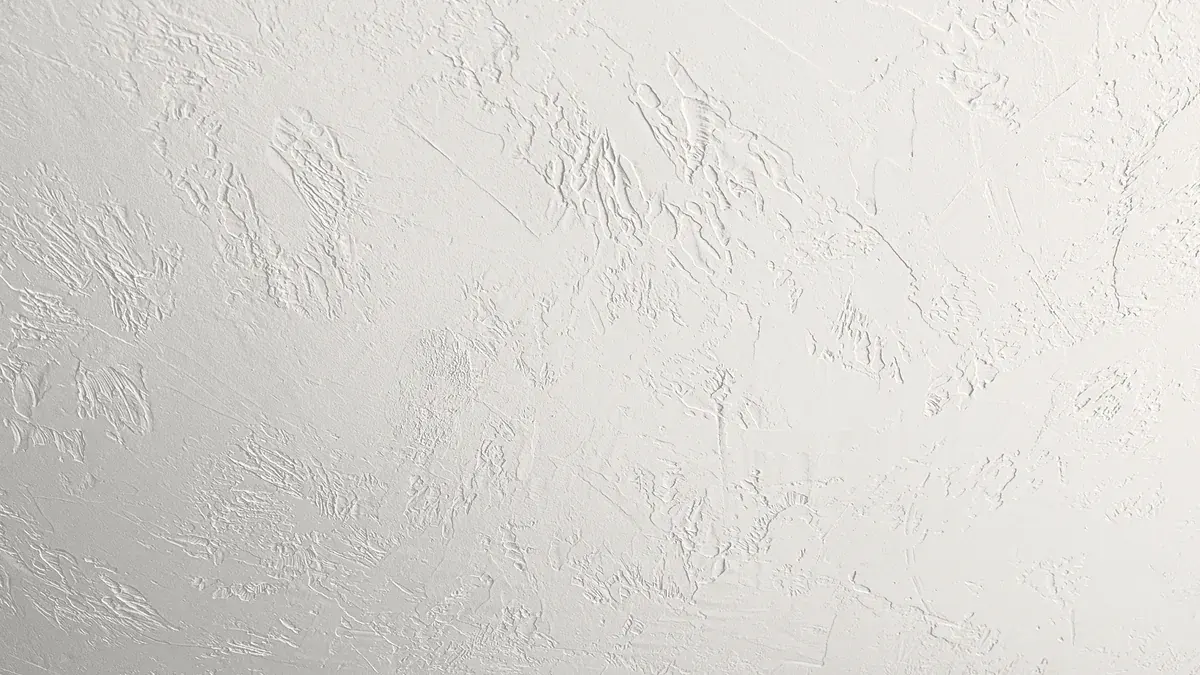
Skip trowel leaves scattered, smooth, slightly raised patches with the flat wall showing between them. It reads as rustic and handmade.
How it is made
A thin coat of mud is pulled across the wall with a curved trowel held at a slight angle, so the blade skips over the surface instead of covering it.
Living with it
It hides flaws and looks custom. It also costs more than a sprayed texture, because every square foot is hand work.
Patching it, and what a repair involves
It is hard to patch. The new piece has to copy one person's rhythm with a trowel, and a patch in someone else's hand stands out.
Do it yourself, or call?
Hire this one out, unless the wall is in a garage you have made peace with.
Santa Fe
Walls
What it looks like
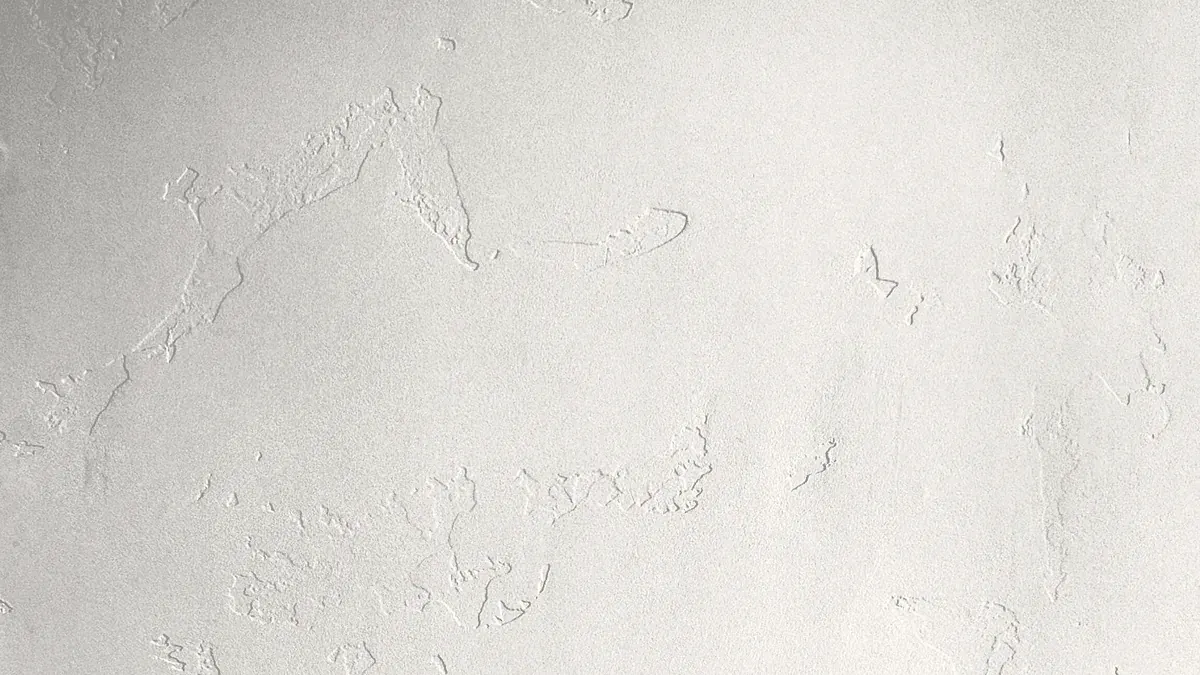
Santa Fe is a low, adobe-like hand texture: broad smooth areas broken up by thin raised edges where the mud was pulled.
How it is made
It is laid on by hand with a trowel or knife, then flattened in broad passes so most of the wall reads smooth.
Living with it
It looks custom and hides waves in the wall well. The raised edges catch a little dust, but far less than a heavy texture.
Patching it, and what a repair involves
It is hard to repair, because the broad smooth areas show any ridge or edge the patch leaves behind, and every installer's pass looks a little different.
Do it yourself, or call?
This is a call-someone texture. A Santa Fe patch done by feel is easy to spot from across the room.
Hawk and trowel
Walls
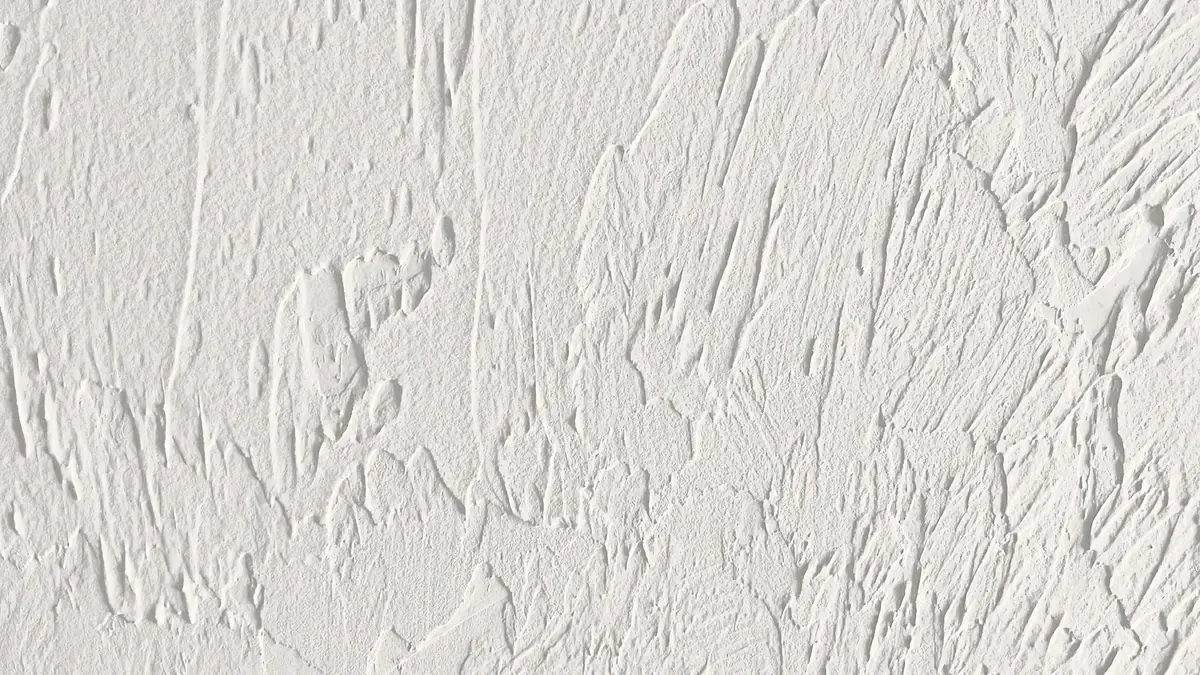
What it looks like
Hawk and trowel is overlapping, wave-like layers of mud, sometimes called a Spanish or hand-trowel finish.
How it is made
Mud is carried on a hawk, a flat square board with a handle underneath, and laid on with a trowel in curved sweeps.
Living with it
Deep texture hides a lot and looks custom. It also chips when furniture finds it.
Patching it, and what a repair involves
Every installer's version is different, so a repair means copying someone else's hand stroke by stroke.
Do it yourself, or call?
Hire it out. The skill here is in the wrist, and it takes a lot of walls to get it.
Smooth walls: level 4 vs level 5
Walls and ceilings
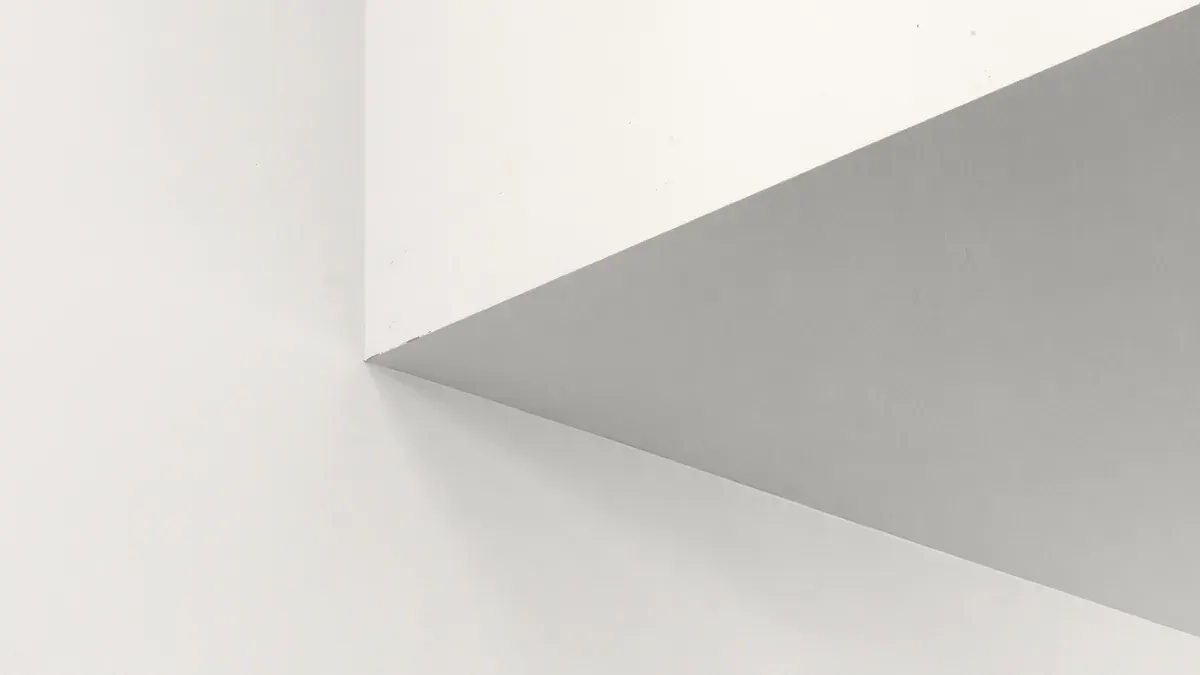
What it looks like
Smooth means no texture at all. How smooth is set by the Gypsum Association's finish levels, from level 0 up to level 5.
How it is made
Level 4 is taped joints with two coats of mud on the flat joints and three on the screws, then sanded. Level 5 adds a thin skim coat over the entire surface. Level 5 is the one recommended under glossy or dark paint, or on walls hit by strong side light. Our guide to drywall levels of finish covers every level.
Living with it
Smooth walls are easy to paint and easy to clean. They also show every flaw, which is the whole reason texture exists.
Patching it, and what a repair involves
A patch on a smooth wall has nowhere to hide. The mud is feathered wide, sanded flat and primed so it does not flash through the paint. Turning a textured wall smooth means skim coating it, which typically runs $2.50–3 per square foot in Houston for a level 5 finish.
Do it yourself, or call?
A small patch on a smooth wall is a reasonable weekend job. A whole-room skim coat is not, unless you enjoy sanding more than anyone should.
Which textures are done with a brush or roller?
Brush textures start with mud rolled onto the surface, then patterned with a brush while it is still wet. You will find them mostly on ceilings.
Slap brush (crow's foot)
Ceilings, sometimes walls
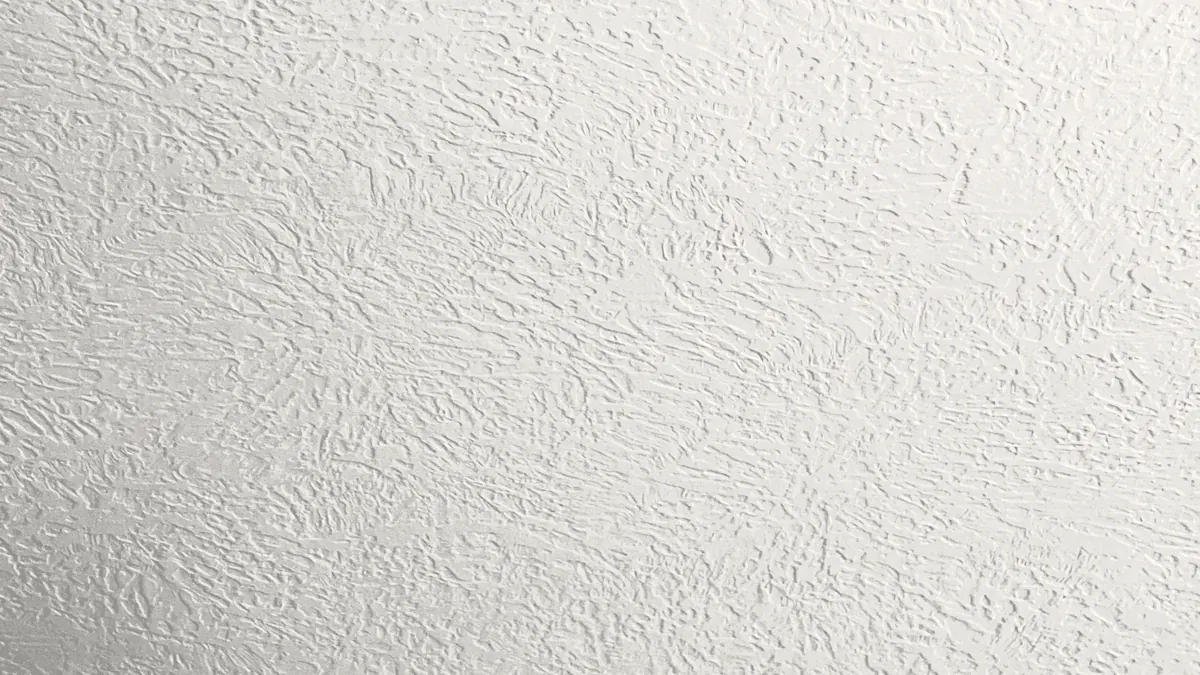
What it looks like
Slap brush is a random pattern of thin raised lines left by a brush slapped into wet mud. Crow's foot is the same idea with two brushes mounted side by side, which leaves a pattern like bird tracks.
How it is made
Thinned mud is rolled on, then slapped with the brush in a loose, overlapping pattern.
Living with it
It hides a lot on a ceiling. It also collects dust in every ridge.
Patching it, and what a repair involves
It is middling to match. The pattern is random, which helps, but the depth of the ridges has to agree with the old ceiling.
Do it yourself, or call?
A small spot is doable if you can find the same kind of brush. Anything bigger than a dinner plate on a ceiling is worth a call.
Stomp (rosebud)
Mostly ceilings
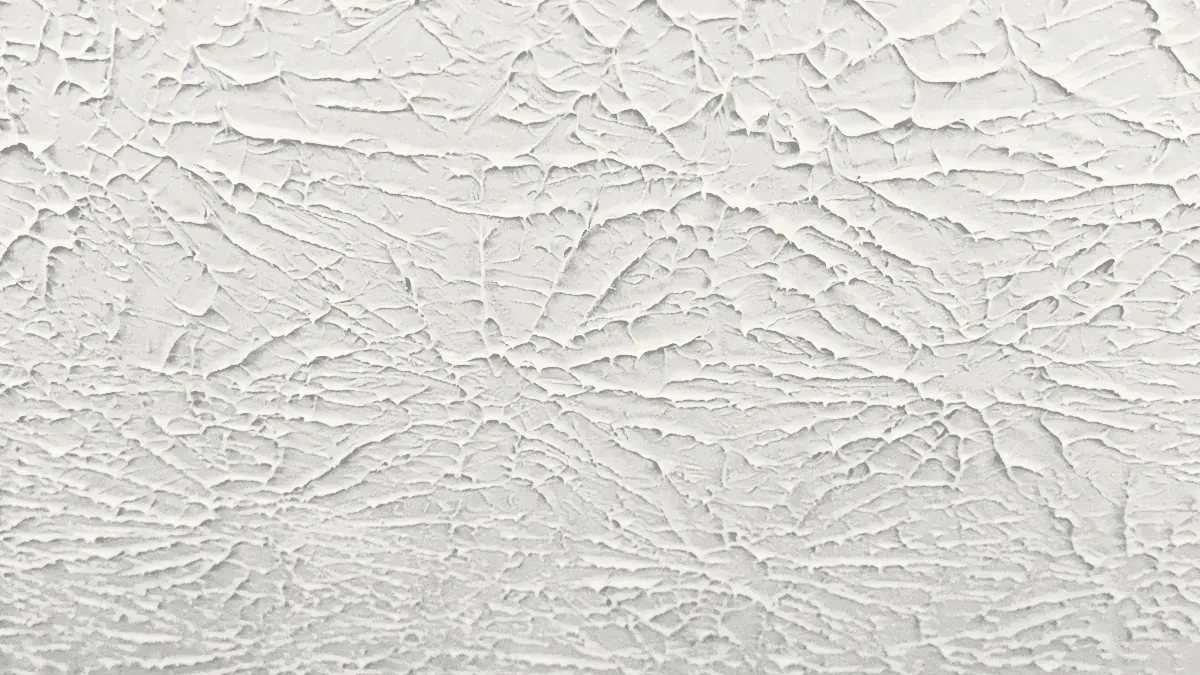
What it looks like
Stomp is heavier: spiky, starburst patterns left in thick mud. Rosebud is a stomp done in an even grid, so it looks like a field of flowers. Heavy stomp was most popular in the 1960s and 1970s, mostly on ceilings.
How it is made
Thick mud is rolled on, then a stomp brush is pressed in and lifted straight off. Rosebud repeats the stomp in neat rows.
Living with it
It hides almost anything. It is also one of the harder ceilings to clean or paint evenly.
Patching it, and what a repair involves
Rosebud is one of the hardest textures to match, because the grid has to line up with the old one.
Do it yourself, or call?
Hire it out. A rosebud patch that is off by half a flower is the only thing anyone will see.
What are the less common textures?
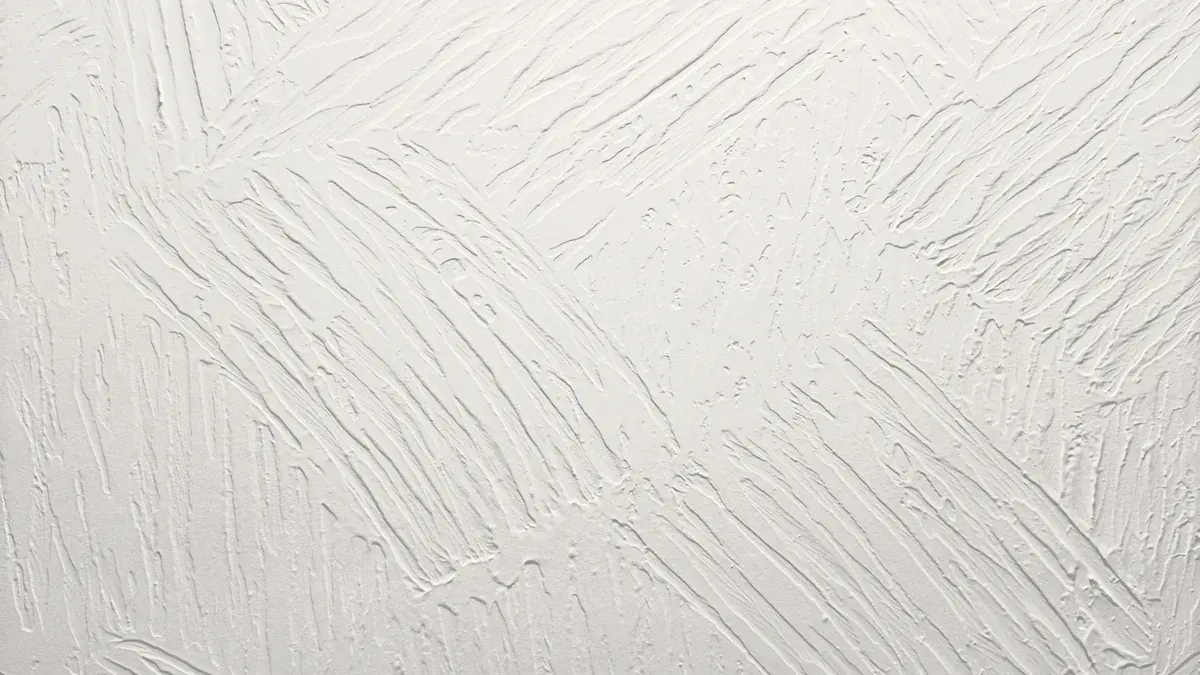
Tree bark knockdown comes from a texture roller. Some rollers have a pattern cut into the cover, and rolling one through wet mud presses that pattern into it, in this case a grain like tree bark. The tops are usually knocked down lightly afterward, which is where the name comes from.
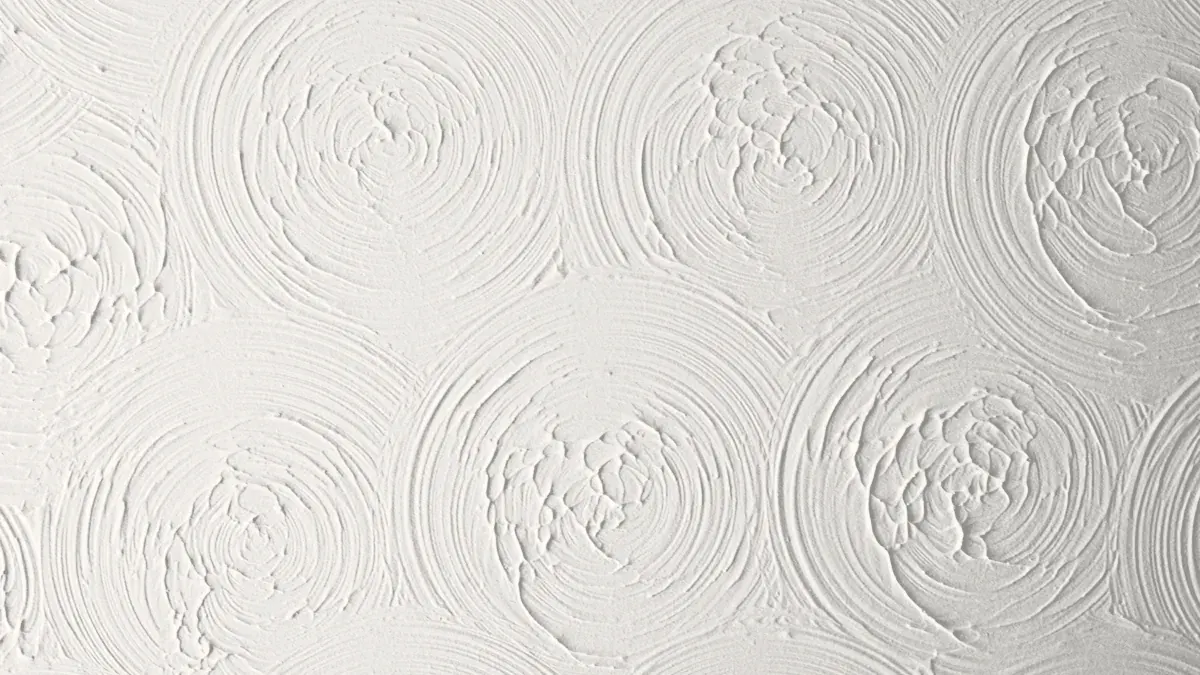
Sand swirl mixes fine sand into paint or mud and brushes it on in overlapping loops, row by row.
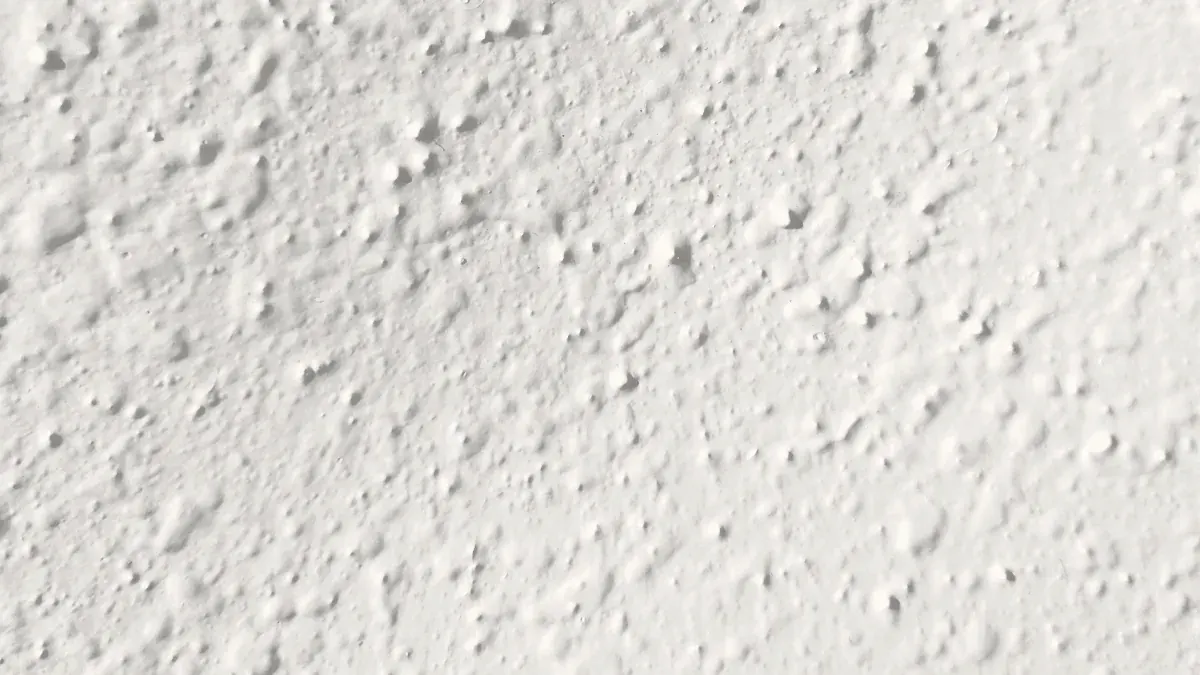
Spray sand is sand mixed into primer or mud and sprayed. It gives a gritty finish that looks like a very small popcorn, and it is durable and hard to clean in about equal measure.
Venetian plaster is not drywall texture at all. It is a lime plaster laid in thin troweled coats and polished to a soft sheen. It is a job for a plaster specialist, and we are not one.
What does texture work cost in Houston?
Matching texture on a patch typically adds about $75 per patch in Houston. Textured work in general runs 30 to 40 percent more than the same work on a smooth wall, because the skill is in the blend.
These are typical Houston ranges, not quotes. A quote is flat, in writing, and given before any work starts. The full list is on our Houston drywall repair costs page, and if the patch is already in and the texture is the problem, that is what our texture matching service is for.
| Work | Typical Houston range | Notes |
|---|---|---|
| Texture match on a patch | ~$75 per patch | Knockdown, orange peel or blend |
| Popcorn ceiling removal | $2–3 per sq ft | Scraping only; the exact price comes after we see the ceiling. Pre-1990 homes: asbestos test first, always |
| Skim coat, smooth over texture | $2.50–3 per sq ft | Level 5 smooth finish |
| Textured work premium | +30–40% over smooth | The skill premium |
Drywall texture questions, answered
Does my textured ceiling have asbestos?
You cannot tell by looking. If the house was built before 1990 and you plan to scrape, sand or drill the ceiling, have a sample tested first. If the ceiling is intact and will not be disturbed, the EPA says it does not need testing.
Can a textured wall or ceiling be made smooth?
Yes. The texture is skim coated with thin coats of mud and sanded flat for a level 5 finish, which typically runs $2.50–3 per square foot in Houston. Soft or water-damaged board gets replaced instead, because skim coating over it only hides the problem.
Why does texture matching cost more than a smooth repair?
Because filling the hole is the easy part. Blending new texture so it disappears into old texture is the skill, and textured work typically runs 30 to 40 percent more than smooth work in Houston.
Which texture is most common in Houston homes?
Knockdown and orange peel. Those are the two textures we run into most in Houston homes. Both are sprayed, both go on fast, and both hide small waves in the board. Not sure which one you have? Look at the tops. Knockdown has flattened islands, orange peel is just small, even bumps.
Can I patch texture myself, or should I call a pro?
A small patch in orange peel or knockdown is a fair do-it-yourself job with an aerosol texture can and some practice on cardboard. Hand textures, rosebud, and popcorn in an older house are worth a call. A single small hole is not worth a service call. A wall full of them is.